Why do plush toy manufacturers follow safety standards? The answer begins with a child’s hands, mouth, and imagination. A loose eye, exposed thread, or poorly secured filling can create a serious hazard. The U.S. Consumer Product Safety Commission’s 2023 Toy-Related Deaths and Injuries report estimated 231,000 emergency-department-treated toy injuries among children under 15. The number is difficult to ignore. It also shows why safety cannot depend on attractive packaging or factory promises.
So, what are the safety standards for manufacturing plush toys? Manufacturers commonly work with requirements such as ASTM F963 in the United States, EN 71 in Europe, and ISO 8124 internationally. These frameworks address flammability, small parts, accessible fibers, seams, stuffing, toxic substances, and mechanical strength. Joan Lawrence, a longtime toy-safety expert and former Toy Association safety executive, has stated, “Safety is the foundation of every toy, not an optional feature.” Her point is practical: a plush toy should survive pulling, washing, squeezing, and repeated bedtime use. Independent laboratories may perform seam-strength tests, flammability testing, chemical screening, and age-grade evaluations. Records must also connect materials to suppliers and production batches. That traceability matters when a problem appears.
Still, standards are not magic. A compliant sample can hide inconsistent factory performance. Human inspection can miss a weak stitch. Responsible manufacturers therefore combine testing, documented quality systems, worker training, and post-market monitoring. Some brands could communicate these controls more clearly. Parents deserve evidence, not vague safety language. A soft toy should feel comforting, but its safety must be measurable.
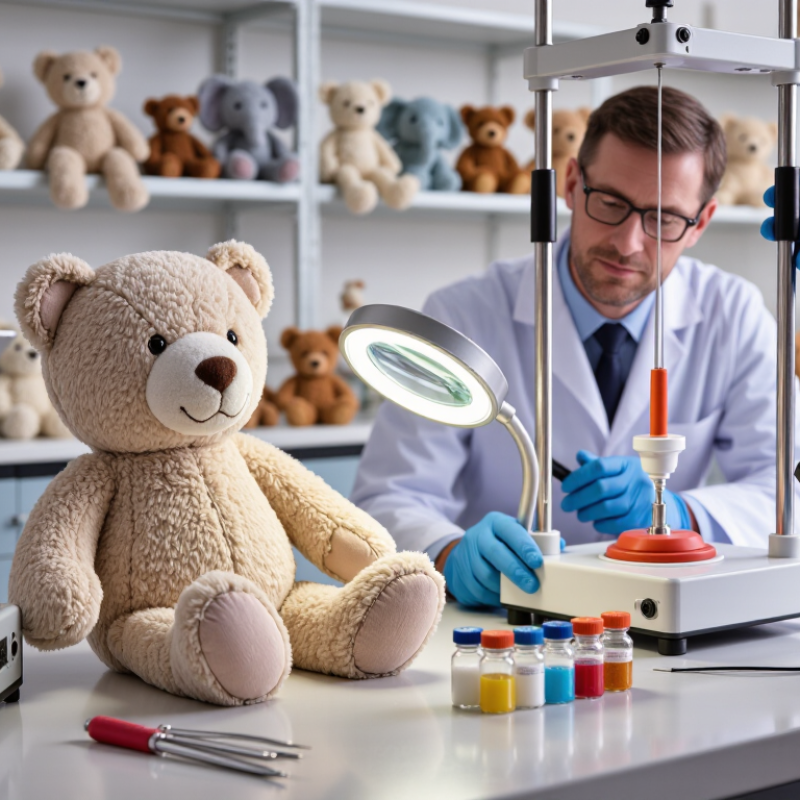
Safety standards turn broad promises into practical checks. For plush toy manufacturers, that can mean testing fabric strength, seam durability, small parts, and flammability. A toy may look soft and simple, yet a loose eye or torn seam can create a real hazard for young children. Requirements vary by market and intended age group, so manufacturers must identify the rules that apply before production begins.
Good quality control starts with the materials. Teams can inspect incoming fabric, check stitching around stress points, and test whether attached features stay secure after repeated pulling. Records matter, too. Clear test reports and batch details help manufacturers trace problems and respond consistently. Testing cannot predict every way a child will play, though. That limitation deserves attention, not excuses.
Tips: Keep material and test records together. Recheck seams after wash testing, and review age labels when a design changes. A small design update can affect risk. Even a familiar toy deserves another look before it reaches a child.
Why Do Plush Toy Manufacturers Follow Safety Standards?
Which Hazards Safety Standards Are Designed to Prevent
Safety standards target hazards that may be hidden inside a soft toy. Loose eyes, buttons, or filling can become choking risks if seams fail. Long cords may wrap around a child’s neck, while poorly secured parts can create sharp edges. Flammability and restricted chemical exposure are also considered during material selection and testing. In the United States, ASTM F963 sets toy safety requirements, including tests for small parts, seams, and accessible materials. The U.S. Consumer Product Safety Commission estimated 231,700 toy-related emergency-room visits among children under 15 in 2023. That figure covers toys broadly, not plush toys alone, but it shows why careful design and quality checks matter.
Tips: Tug firmly at stitched features and inspect seams for gaps. Check the age guidance, especially for toys with detachable decorations. A soft surface can feel reassuring, yet it does not prove that the filling or stitching is safe. And labels can be missed. Manufacturers should test finished products, not just rely on supplier paperwork, because small changes in fabric, thread, or stuffing may affect results. No test catches every real-world misuse; that limitation deserves honest attention.
These limits help reduce children’s exposure to lead and certain phthalates. They apply to different materials and substances, so the bars are not a comparison of relative risk. Toy safety standards also address physical hazards such as choking on small parts, sharp edges, and unsafe seams.
Why Do Plush Toy Manufacturers Follow Safety Standards?
How Manufacturers Select Safe Materials and Components
Choosing safe plush materials starts with the child’s age and how the toy will be used. Manufacturers assess fabric, stuffing, dyes, thread, and components such as plastic eyes. CPSC estimated 231,700 toy-related emergency-department injuries among children under 15 in 2023. That estimate covered all toy types, not plush toys alone. Small parts matter. ASTM F963-23 addresses toy hazards including mechanical, flammability, and chemical risks.
A practical materials review checks supplier specifications and asks for test reports that match the finished toy, not just its raw fabric. For example, a maker might inspect seams after stress testing and check that eyes remain firmly attached. Colorfastness testing can help flag dye transfer when a toy gets damp. Material choices also need to suit the intended age group and care instructions. A paperwork check can still miss a weak seam or inconsistent batch, so sampled production units and traceable lot records matter. The CPSC report provides useful context, but it does not replace product-specific testing.
Tips: Keep a sample from each materials lot, record supplier and test details, and recheck components after design changes. Look closely at seams, labels, and attachments. Small oversights can happen.
Plush toy safety testing begins with the parts children touch and pull. Inspectors check seams, fabric, eyes, noses, and decorative pieces. A tester may tug a stitched eye with measured force. Weak attachments can detach and become a choking hazard. Small details matter.
Factories also examine fabric and filling. They may screen materials for restricted chemicals and check colorfastness after rubbing or washing. A damp white cloth can reveal dye transfer. Metal-detection equipment can help find broken needles left from sewing, though it cannot replace careful inspection. Stuffing should feel evenly spread, without hard clumps or sharp objects. Not every toy behaves the same after repeated play, so tests should include realistic handling and wear.
Quality checks often happen at several stages: incoming materials, production, and finished goods. Teams record results and investigate failed samples before release. Age grading matters, too, because a feature suitable for an older child may be unsafe for a toddler. Testing has limits. A sample cannot represent every item in a large batch, and real play is unpredictable. That is why clear procedures, trained inspectors, and honest follow-up matter. Sometimes a tiny seam gap is easy to miss. It still deserves another look.
| Safety or Quality Dimension | What Is Checked | How It Is Commonly Evaluated | Why It Matters | Relevant Standards or Requirements |
|---|---|---|---|---|
| Age grading and intended use | Whether the toy’s design, features, and labeling are appropriate for its intended age group. | Review of product design, play value, packaging, and foreseeable use; applicable tests depend on the age grade and market. | A toy suitable for an older child may present a hazard to a younger child who mouths or pulls at it. | Age-grading guidance and toy-safety rules applicable in the destination market. |
| Small parts and detachable components | Eyes, noses, buttons, decorative pieces, or other components that could detach and create a choking hazard. | Inspection and, where required, small-parts testing after applicable use-and-abuse tests; results are assessed against the relevant rules and age grade. | Small detachable parts can pose a choking risk, particularly for children under three. | U.S. small-parts requirements, including applicable provisions of 16 CFR Part 1501 and toy-safety standards; requirements vary by age and market. |
| Seams, attachments, and structural strength | Stitching, fabric joins, attached features, and the likelihood that stuffing or a component can become exposed. | Applicable tension, torque, drop, or other use-and-abuse tests, followed by inspection for breakage, sharp hazards, or accessible filling. | Weak seams or attachments can expose filling or release parts during normal or reasonably foreseeable play. | Mechanical and physical safety requirements in standards such as ASTM F963 or EN 71-1, using the edition and clauses applicable to the market. |
| Sharp points, edges, and projections | Exposed wire, rigid inserts, broken plastic parts, or other features that could cause cuts or punctures. | Visual examination and applicable sharp-point, sharp-edge, and mechanical-hazard assessments, including after required abuse testing. | A soft exterior does not rule out a hazard if an internal or attached component becomes exposed. | Applicable mechanical and physical requirements in ASTM F963, EN 71-1, or other local toy-safety rules. |
| Flammability | How materials behave when exposed to the test conditions specified for the product and market. | Testing of representative materials or the finished toy using the applicable method and acceptance criteria. | Flammability testing helps assess the risk of a toy igniting or burning in a hazardous way. | EN 71-2 addresses flammability of toys; applicable U.S. and other national requirements should also be checked. |
| Restricted chemical substances | Certain elements or chemicals in accessible materials, coatings, and components, as required by the applicable regulation. | Material documentation and, when required, laboratory analysis of relevant samples against the limits for the destination market. | Chemical limits are intended to reduce children’s exposure to substances of concern through foreseeable contact or mouthing. | Examples include EN 71-3 migration limits and U.S. CPSIA limits. U.S. CPSIA generally limits lead in accessible toy components to 100 ppm and lead in paint or similar surface coatings to 90 ppm; specified phthalates are limited to 0.1% in covered children’s toys and child-care articles. |
| Colorfastness and material performance | Whether fabric, dyes, and surface treatments withstand relevant handling without unacceptable transfer or deterioration. | Applicable rubbing, washing, or other material tests may be used according to product claims, construction, and market requirements. | Durable materials help maintain appearance and reduce the chance that wear will expose components or create hazards. | Test methods are selected for the material and intended care instructions; there is no single universal colorfastness test for every plush toy. |
| Labels, warnings, and traceability | Required age warnings, care information, product identification, and tracking information where applicable. | Review of labels and packaging against the rules for the sales market and product category. | Clear information helps caregivers select and care for toys appropriately and supports product identification if a safety issue arises. | Requirements differ by jurisdiction. U.S. children’s products may be subject to CPSIA tracking-label requirements, where applicable. |
| Documentation and ongoing production checks | Test records, material specifications, production consistency, and evidence that applicable requirements have been addressed. | Review of test reports and compliance documents; manufacturers may also use incoming-material checks and production inspections. | Controls help ensure that production units remain consistent with the tested design and materials. | For U.S. products subject to applicable children’s product rules, certification and testing requirements may apply; other markets have their own conformity processes. |
Note: Applicable tests and limits depend on the toy’s design, intended age group, materials, and destination market. A standard name in this table does not mean every listed test applies to every plush toy.
Safety compliance is not a certificate filed once and forgotten. It is a trail of records connecting each plush design to its materials, tests, and production batches. A factory file may include fabric and filling specifications, seam-strength results, flammability test reports, and checks for small parts. Each record should identify the sample, date, test method, and responsible reviewer. Keep revisions too. A new supplier or changed fabric can make an old test report less relevant.
Audits test whether those documents match the toy on the production line. Inspectors may compare a batch number on a carton with the production log, then examine seam samples and stitching records. The European Commission’s Safety Gate 2023 report recorded 3,412 alerts for dangerous non-food products overall. That figure is not specific to plush toys, but it highlights the value of traceable follow-up. When a material changes, teams should review testing needs, update records, and document their decision. Paperwork can still miss a rushed shift. Regular spot checks help reveal gaps, while corrective-action records show whether fixes actually lasted.
Safety standards turn general promises into practical checks. They cover materials, seams, small parts, flammability, and age suitability. Soft is not proof.
They help reduce choking risks from loose eyes, buttons, or exposed filling. They also address long cords, sharp edges, flammability, and restricted chemical exposure.
Weak fabric can tear during ordinary play. Teams should inspect stress points and test seams after repeated pulling. A small gap matters.
They can tug stitched features firmly and examine nearby seams. Repeated-pull testing may reveal loose eyes, buttons, or decorations.
Clear records connect materials, test results, and production batches. They help teams trace problems and respond consistently. Records matter.
Yes. Supplier paperwork may not reflect changes in fabric, thread, stuffing, or stitching. Finished products need their own checks.
Washing can weaken seams or change the fabric’s condition. Manufacturers should recheck stitching after wash testing, especially around attached features.
A minor update can change the risk profile. New decorations, cords, or stuffing may create different hazards for younger children. Small changes matter.
No. Testing covers known hazards, but children may pull, chew, twist, or misuse toys unexpectedly. That limitation needs honest attention.
Plush toy manufacturers follow safety standards to help ensure that toys are suitable for children and consistent in quality. Understanding what are the safety standards for manufacturing plush toys begins with recognizing the hazards they are designed to reduce, such as choking risks from small parts, loose stitching, sharp components, or materials that may be unsuitable for a child’s toy. Manufacturers can address these concerns by selecting appropriate fabrics, fillings, threads, and attached components, then checking that each part is securely made and fit for its intended use.
Safety checks continue throughout production. Plush toys may be inspected and tested for construction strength, small-part security, material quality, and other age-related safety concerns. Manufacturers also keep records of material choices, test results, inspections, and production procedures so that compliance can be reviewed and maintained over time. Regular audits and ongoing quality checks help identify changes or problems early, supporting safer products and more reliable manufacturing practices.

Ottoman Toys