A favorite plush toy can collect dust, snack crumbs, and sticky fingerprints in its fur. Washing it carelessly may flatten the pile, loosen seams, or damage glued-on eyes. The safest method depends on its fabric, age, and construction. A sturdy, machine-washable teddy bear needs different care from a vintage toy with delicate stitching. Small details matter.
This guide to how to wash plush toys without ruining them offers ten practical tips, from checking the care label to choosing between spot cleaning and a gentle wash. Laundry-care writer Mary Marlowe Leverette’s general guidance emphasizes checking labels and matching the cleaning method to the fabric. Applied to plush toys, the principle is simple: let the toy’s materials guide your choices, not a one-size-fits-all routine.
A quick inspection can prevent avoidable damage. Look for loose threads, brittle parts, small openings, or decorations that may come away in water. Test a hidden patch with a damp cloth before treating a visible stain. If the toy can be machine-washed, a mesh laundry bag, cool water, and mild detergent can help reduce friction. Air-drying usually gives delicate fibers and glued details a gentler finish than high heat. Still, even careful washing can leave a toy slightly changed. That possibility deserves honest consideration, especially with keepsakes. The tips ahead explain what to check, what to avoid, and when a careful spot clean may be the better choice.
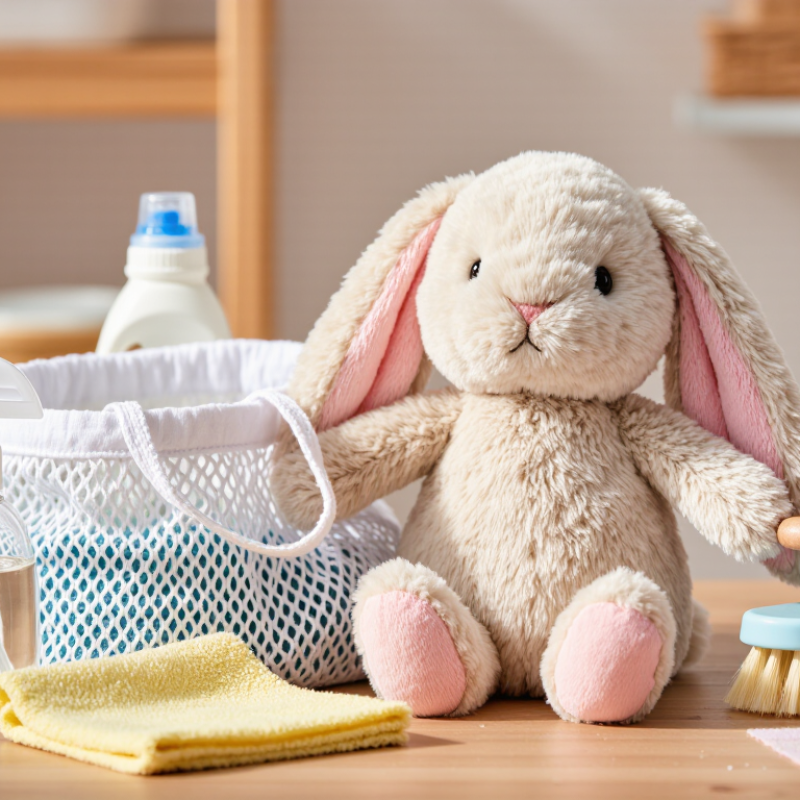
Check Care Labels and Identify the Toy’s Materials
Before washing a plush toy, check its sewn-in care label, often tucked into a side seam or near the bottom. Follow its symbols and written instructions, especially any warnings about water temperature, hand washing, or tumble drying. If the label is faded, take a clear photo before handling the toy; a tiny symbol can be hard to read later. Small clues matter.
Next, identify what the toy is made of. Short-pile polyester usually tolerates gentle cleaning better than delicate fabrics such as wool, velvet, or faux fur. Check for beads, plastic eyes, ribbons, glued decorations, and sound boxes. These parts may loosen, melt, or trap water, even when the outer fabric seems sturdy. A toy with a battery compartment or electronic parts should not go into a washing machine.
If the label is missing, inspect a hidden patch and test a damp, white cloth on it. Look for color transfer or a change in texture. When unsure, pause. Hand-cleaning one small area may be safer than soaking the whole toy, though it can leave uneven results. I would rather accept a slightly imperfect clean than risk damaged seams or flattened fur.
Prepare Plush Toys by Removing Dust and Spot-Treating Stains
Before washing, take the plush toy outdoors or hold it over a clean towel and gently brush away loose dust. Use a soft clothes brush, working from the head toward the feet. For seams and fur near the face, a low-suction vacuum with a clean mesh cover can help; keep the nozzle moving. Don’t shake dusty toys indoors, especially around children with allergies. Small steps matter.
Inspect the care label and check for loose stitching, glued decorations, or batteries. Then test a damp white cloth on a hidden area. Blot stains with cool water and a little mild detergent; rubbing can roughen the pile or push dirt deeper. Work from the stain’s edge inward, and use a fresh section of cloth as color lifts. I still miss a seam sometimes, so check the back and under the arms.
Let the spot-treated area dry before washing, so you can see whether the stain has actually faded. The U.S. Environmental Protection Agency’s mold guidance recommends keeping indoor relative humidity ideally between 30% and 50%; that range also helps a toy dry in a less damp room. It is not a plush-toy washing rule, but a useful drying condition. If the toy has delicate trim, persistent staining, or an uncertain label, pause rather than scrub harder.
Choose Between Hand Washing and Machine Washing
Choose washing by the toy’s label and construction, not just its size. A sturdy plush with stitched features and no electronics can often handle a cold, gentle machine cycle. Put it in a mesh laundry bag, use a small amount of mild detergent, and skip bleach and high spin speeds. Delicate stitching? Hand wash it instead. Press it gently in cool, soapy water, then rinse until the water runs clear. Don’t wring it; that can distort stuffing and strain seams. A 2016 study in Marine Pollution Bulletin measured synthetic-fiber release from clothing in domestic washing machines, including about 496,000 fibers from polyester fabric per wash. It did not test plush toys, so treat this as a reason for care, not proof that hand washing is always better.
For toys with glued-on details, sound boxes, foam parts, or worn seams, spot-cleaning is usually safer than soaking. Dab stains with a damp cloth and mild soap, then remove residue with a clean cloth. Check hidden areas, too. A toy may look sturdy while its stitching is already loose. Air-dry plush toys flat, reshaping the limbs and body while damp; tumble heat can damage fibers or leave the center wet. Hand washing takes longer, and it can leave soap behind if rinsing is rushed. I still find the care label imperfect guidance: older toys may have lost theirs, so inspect the seams and test a small hidden patch first.
Top 10 Tips for Washing Plush Toys
Choose between hand washing and machine washing
The chart groups a 10-tip checklist by washing stage; the counts are checklist items, not survey results. Check the care label first. Hand wash delicate, damaged, or embellished toys; use a machine only when the label allows it, in a mesh laundry bag on a gentle, cool cycle. Air-dry thoroughly before use.
Wash Gently with Mild Detergent and Protective Settings
Check the care label before washing; some plush toys contain glued eyes, cardboard inserts, or delicate seams. AATCC TM135, a textile-industry laundering test method, controls temperature and agitation when evaluating fabric changes. For a washable toy, choose a cold, gentle cycle, place it inside a zippered mesh bag, and use a small amount of mild detergent. Keep the drum loosely filled so the toy can move without being crushed. Less friction helps. Skip bleach and fabric softener, which may leave residue or stress delicate fibers. An extra rinse can help remove detergent from thick stuffing.
A 2016 study in Environmental Science & Technology estimated that a 6-kilogram load of synthetic clothing could release as many as 700,000 fibers during washing. That was not a plush-toy test, so it is a caution about laundry friction, not a toy-specific prediction. Gentle is not risk-free. Check seams and stitching before washing, then reshape the toy and air-dry it flat; high heat can deform fibers or loosen glued parts. One easy-to-miss detail: the outside may feel dry while the stuffing stays damp. Press the toy with a clean towel and allow extra drying time before returning it to a bed or shelf.
Top 10 Tips for Washing Plush Toys Without Ruining Them - Wash Gently with Mild Detergent and Protective Settings
| # |
Tip |
What to Do |
Why It Helps |
| 1 |
Check the care label |
Follow the toy’s care instructions before washing. If the label says surface clean only, do not machine-wash it. |
Materials and construction vary, so the label is the best guide for safe care. |
| 2 |
Remove batteries and accessories |
Take out batteries, sound modules, removable clothing, and other detachable parts before cleaning. |
Water can damage electronics, while loose parts may be damaged or lost in the wash. |
| 3 |
Spot-test first |
Dab a hidden area with a little cool water and mild detergent, then blot it with a clean cloth. |
A small test can reveal color transfer or changes to the fabric before a full wash. |
| 4 |
Use a protective bag |
Place a washable toy in a mesh laundry bag or a tied pillowcase before putting it in the washer. |
A barrier helps reduce rubbing, snagging, and stress on seams. |
| 5 |
Choose a gentle cycle |
Select the delicate or gentle setting with a low spin speed, if available. |
Less agitation and spinning can help protect stuffing, seams, and decorative details. |
| 6 |
Wash with cool water |
Use cool water unless the care label specifies another temperature. |
Cool water is a gentle default that can reduce the risk of color bleeding or heat-related damage. |
| 7 |
Add mild detergent sparingly |
Use a small amount of mild laundry detergent, following the product’s dosing directions. |
A gentle wash helps clean the fabric, while excess detergent can be harder to rinse out. |
| 8 |
Skip bleach and fabric softener |
Avoid chlorine bleach and fabric softener unless the care instructions specifically allow them. |
These products may affect colors, fibers, or the toy’s surface finish. |
| 9 |
Air-dry thoroughly |
Press out excess water with a clean towel without twisting, then air-dry the toy in a well-ventilated spot. Reshape it while damp. |
Gentle drying helps preserve the toy’s shape; drying fully helps prevent lingering dampness inside the stuffing. |
| 10 |
Use a dryer only if permitted |
If the care label allows tumble-drying, use a low-heat or no-heat setting and check the toy regularly. |
High heat can damage fabric or glued details; some toys are best kept out of the dryer entirely. |
Note: Toys with electronics, delicate embellishments, glued-on details, or loose or weighted fillings may need surface cleaning instead of machine washing.
Dry Thoroughly and Restore the Toy’s Shape and Texture
After washing, press the plush toy gently between clean towels to remove excess water. Do not twist or wring it; that can strain seams and flatten the filling. Check the care label before choosing a drying method. Air-drying is usually gentler than using a dryer, especially for toys with glued details or delicate fabric. Patience matters.
Lay the toy on a dry towel in a well-ventilated spot, away from direct heat and strong sunlight. Turn it every few hours so damp areas do not stay trapped underneath. Feel the seams, ears, and thicker limbs; these spots can remain wet after the surface seems dry. A fan can improve airflow, but avoid aiming intense heat at the fabric. It is easy to assume a toy is dry too soon.
When the toy is nearly dry, reshape it with your hands. Gently separate clumps of filling through the fabric, then smooth the limbs and face into their usual positions. Let it finish drying completely before brushing the pile with a soft brush. Small strokes help lift flattened fibers without pulling them. If the texture still feels slightly damp, give it more time. Rushing this stage can leave a musty smell, and reshaping cannot fix every flattened patch.
Conclusion
Learning how to wash plush toys without ruining them starts with checking the care label and identifying the toy’s materials, since delicate fabrics, glued details, or internal components may need special care. Before washing, gently remove dust and loose debris, then spot-treat stains with a mild cleaning solution. Choose hand washing for fragile toys or machine washing when the label allows it. A protective laundry bag and a gentle, cool-water setting can help reduce friction and protect the toy’s shape.
Use a small amount of mild detergent, and avoid harsh cleaning methods that may damage the fabric or stuffing. After washing, remove excess water by pressing the toy gently in a towel rather than twisting it. Let it dry thoroughly in a well-ventilated area, reshaping it as needed while it dries. Once fully dry, gently fluff the fabric and adjust the stuffing to help restore its original texture and appearance.

 Ottoman Toys