Moving plush toys can feel simple, until a favorite bear disappears beneath heavy kitchenware. Learning how to pack plush toys for moving houses protects their shape, fabric, and sentimental value. It also makes unpacking calmer. Small details matter here.
Professional organizer Marie Kondo offers a useful principle: “The true purpose of storage is to give every item a home.” That idea fits plush toys well. Each toy should receive a clean, suitable space before the moving truck arrives. Begin by checking every toy for dust, moisture, loose stitching, or forgotten objects inside. Wash only when the care label allows it. Let each piece dry completely. Damp fabric can develop an unpleasant smell inside sealed boxes.
Use breathable cotton bags, clean pillowcases, or sturdy plastic bins with ventilation. Avoid crushing soft toys beneath books, tools, or appliances. Place larger bears at the bottom and smaller animals around them. Keep delicate accessories in a labeled pouch. A simple inventory can prevent anxious searching later.
Do not overpack.
That is where many careful movers slip. A box may look efficient, yet compressed stuffing can lose its shape. Leave a little air around fragile toys, especially handmade pieces. Label each container with “plush toys,” the room name, and handling notes. I would also photograph valuable or especially meaningful toys before sealing the box. It feels excessive, perhaps. During a hectic move, that record can provide useful reassurance and reveal what still needs improvement.
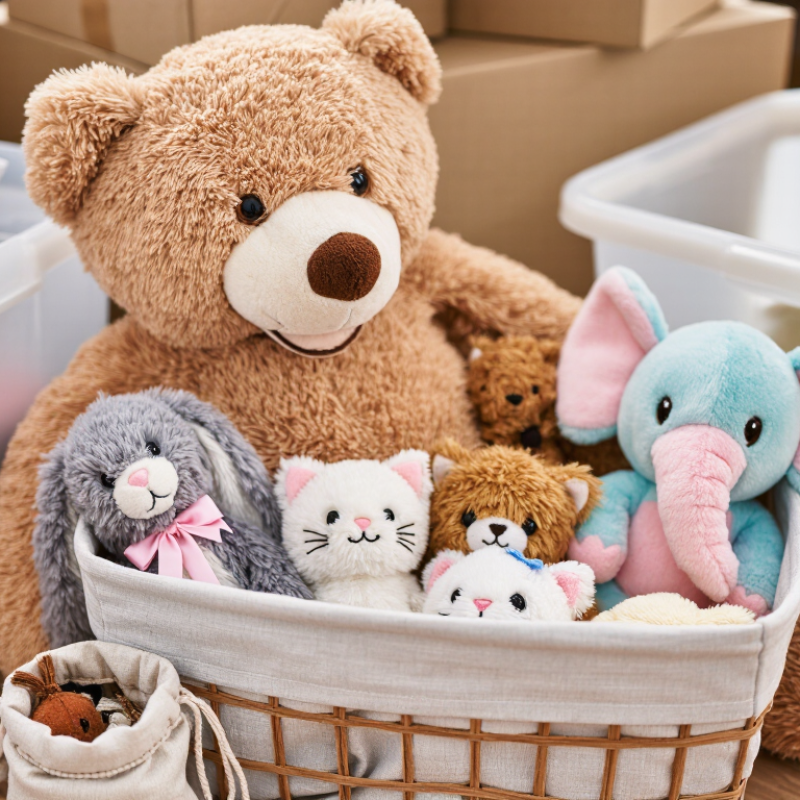
Before packing plush toys, inspect each one like a small household item, not an emotional keepsake. Check seams, loose eyes, flattened filling, stains, odors, and hidden moisture. A damp toy can develop mold inside its stuffing. The U.S. Environmental Protection Agency reported that 17.03 million tons of textiles entered municipal waste streams in 2018, while only 14.7% was recycled. That figure is not plush-specific, but it shows why careful sorting matters before disposal.
Use three groups: keep, clean and repair, or release. Keep favorites that still have family value and safe construction. Wash removable covers according to their care labels, then dry them completely. Avoid sealing even slightly damp toys. For toys with torn seams or loose parts, pause before packing. The U.S. Consumer Product Safety Commission advises checking toys for small parts, broken components, and age-related hazards. Plush toys can hide damage beneath fur.
Measure the available moving box before choosing what stays. Overfilled cartons can crush faces and stretch stitching. Place heavier soft toys at the bottom, but avoid sharp household objects nearby. Photograph rare or sentimental toys before packing; memories are unreliable during a rushed move. I sometimes keep toys for sentimental reasons, then question that decision months later. That hesitation is useful. If a toy causes guilt rather than comfort, it may deserve a different destination. EPA waste data suggests that thoughtful decisions made early can reduce unnecessary disposal later.
Gathering the right materials makes plush toy packing safer and gentler. I start with clean, dry hands and inspect every toy for loose threads or damp areas. A breathable cotton bag protects soft fabric from dust without trapping moisture. Acid-free tissue paper helps preserve delicate faces, ribbons, and embroidered details. Avoid newspaper because ink can transfer onto light-colored fur.
Choose a sturdy corrugated box with enough room for cushioning. The U.S. Environmental Protection Agency reported 82.2 million tons of containers and packaging entered the U.S. waste stream in 2018. Its report recorded a 53.9% recovery rate. Reusable bags and correctly sized boxes can reduce unnecessary material use. ISTA transit-testing guidance also identifies vibration, compression, and drops as common shipping stresses. I place heavier plush toys below lighter ones, then fill empty spaces with crumpled kraft paper. I used to overpack boxes with plastic air pillows. That protected corners, but it sometimes flattened soft toys.
Tips: Use one clean liner inside each box. Keep plush toys away from damp walls, cleaning products, and sharp tools. Do not vacuum-compress collectible toys for long storage. Check the box after sealing; it should feel firm, not strained. A small label stating “Soft Items” may encourage gentler handling, although labels cannot replace proper cushioning. Before moving day, photograph valuable toys and record their condition. That step feels excessive, but it helps reveal damage later.
Before packing plush toys, inspect each one for dust, stains, loose threads, and hidden moisture. Check the care label and test a small, unseen area with mild soap and cool water. This prevents color bleeding or fabric damage. I once soaked a vintage toy without testing it first. The colors faded slightly, so patience matters.
For washable toys, place them inside a mesh bag and use a gentle cycle with a small amount of detergent. Hand-wash delicate toys in a basin, pressing water through the fabric instead of twisting them. Remove batteries, sound units, ribbons, or detachable parts before cleaning. A soft toothbrush can lift dirt from seams and embroidered details. Avoid strong chemicals, hot water, and rough scrubbing.
Drying requires more attention than washing. Press the toy between clean towels, then reshape its head, limbs, and stuffing. Air-dry it in a shaded, well-ventilated room. Direct sunlight may fade the fabric. Turn the toy every few hours so the inner stuffing dries evenly. A fan can improve airflow, but avoid high heat from hair dryers. Check deep seams and the base of the toy before packing. It should feel completely dry, not merely dry on the surface. I sometimes rush this step before moving, and that is a mistake. Slight dampness can create a musty smell inside sealed boxes. Once dry, place each toy in a clean breathable bag rather than airtight plastic.
| Plush Toy Condition | Pre-Cleaning Check | Recommended Cleaning Method | Water Temperature | Drying Method | Typical Drying Time | Packing Readiness |
|---|---|---|---|---|---|---|
| Lightly dusty, washable plush toy | Check the care label, loose stitching, and attached parts. | Vacuum gently with a brush attachment, then wipe the surface with a slightly damp cloth. | Cool to lukewarm water | Air-dry in a well-ventilated place; reshape the toy while damp. | 4–12 hours | Pack when fully dry |
| Machine-washable plush toy | Remove batteries, sound units, removable clothing, and delicate accessories. | Place inside a mesh laundry bag and use a gentle cycle with mild detergent. | Cold or lukewarm water | Press with a clean towel, then air-dry. Use a low-heat dryer only if the care label permits. | 12–24 hours | Check seams and stuffing before packing |
| Hand-washable plush toy | Test a hidden area for color bleeding and inspect embroidered details. | Gently clean in a basin with mild detergent; avoid twisting or wringing. | Cool to lukewarm water | Rinse thoroughly, roll in a towel to remove excess water, and dry flat or upright with airflow. | 12–36 hours | Pack only after the inner stuffing is dry |
| Large or heavily stuffed plush toy | Look for dense filling, hidden pockets, and areas that retain moisture. | Spot-clean or hand-wash in sections when possible; avoid soaking unless the label allows it. | Cool water preferred | Use several dry towels, rotate the toy regularly, and provide continuous ventilation. | 24–72 hours | Confirm there is no cool or damp area inside |
| Plush toy with electronic parts | Remove batteries and electronic components if designed to be removable. | Surface-clean with a well-wrung cloth; do not immerse the toy or allow water near the compartment. | Minimal moisture only | Air-dry naturally away from direct heat; keep the battery compartment open during drying. | 2–12 hours | Pack after the compartment is completely dry |
| Plush toy with glued-on eyes or decorations | Check whether the decorations are loose, cracked, or water-sensitive. | Use gentle surface cleaning; avoid strong rubbing, soaking, and chemical cleaners. | Cool water on cloth only | Blot moisture with a towel and air-dry away from radiators, hair dryers, and direct sunlight. | 4–24 hours | Secure loose parts before packing |
| Vintage, collectible, or delicate plush toy | Inspect fabric fragility, fading, old seams, odors, and signs of mold or pests. | Use gentle surface dusting and limited spot-cleaning; avoid full washing unless professionally advised. | Room-temperature water for spot treatment | Air-dry slowly in shade with good airflow; do not use high heat. | 6–48 hours | Consider professional cleaning before moving |
| Plush toy with a strong odor | Check for dampness, mildew, spills, or hidden contamination. | Clean according to the care label; do not mask a musty odor with fragrance. | Care-label temperature | Dry completely outdoors in shade or in a well-ventilated indoor area. | 12–48 hours | Do not seal until the odor source is addressed |
| Clean and fully dried plush toy | Confirm that seams, stuffing, accessories, and the interior feel dry. | No additional cleaning required; brush the pile gently to restore its shape. | Not applicable | Keep away from moisture before packing. | Ready for packing | Wrap in clean breathable material and place in a dry box |
Wrapping, sorting, and boxing plush toys takes more care than their soft shape suggests. In my moving experience, dust hides easily around ears, seams, and embroidered details. Check each toy for moisture, loose stitching, or small parts before packing. Wash only when the care label allows it. Let every toy dry completely. Damp fabric can develop an unpleasant smell inside a closed box.
Sort the collection by owner, size, or emotional value. Keep daily favorites in a separate, easy-to-reach bag. Group delicate toys with similar shapes, rather than forcing them together. Wrap valuable or fragile plush toys in clean tissue paper or cotton sheets. Avoid newspaper, which can transfer ink and leave a stale odor.
I once compressed a soft toy too tightly, and its shape stayed flattened for weeks. That mistake still affects how I pack.
Use clean, sturdy boxes with dry interiors. Place larger toys at the bottom and lighter ones above them. Fill empty spaces with plain paper, but do not crush the pile. Leave enough room for the lid to close naturally.
Small toys can go into labeled fabric bags before entering the box. Write the room and contents on two sides. Clear labels help when boxes face different directions.
Plastic storage may seem convenient, but long-term sealing can trap moisture. A breathable cover is safer for extended storage.
Labeling and Storing Packed Plush Toy Boxes for Moving Day
Before packing plush toys, check each one for dust, moisture, or loose parts. Clean them gently and let them dry completely. A slightly damp toy can make a box smell musty. I learned this after storing one overnight in a rushed load. It was not ruined, but the fabric needed extra airing. Use clean, sturdy boxes with breathable packing paper. Avoid sealing soft toys in airtight plastic for long periods.
Give every box a clear label on the top and two sides. Write “Plush Toys,” the room destination, and a simple box number. Add a short contents note, such as “animal figures, dolls, and winter decorations.” This helps movers place boxes correctly and helps you find a familiar toy quickly. Use large, dark lettering that remains readable under weak hallway lighting. A small inventory list on your phone can support the labels, although mine was incomplete during one move.
Keep plush toy boxes away from heavy furniture, cleaning liquids, and direct sunlight. Store them upright when possible, without crushing the contents. Place the most delicate toys near the top, separated with soft paper or clean towels. Do not overfill the box. Leave enough space to close it without forcing the flaps. Mark fragile items honestly, even when the toys seem lightweight. Moving-day confusion happens easily. A label can prevent it.
Estimated plush-toy capacity by moving-box size, based on an average compressed packed volume of approximately 3 liters per toy.
Use breathable cotton bags, acid-free tissue paper, clean towels, and crumpled kraft paper. Choose a sturdy box with enough room for cushioning. Avoid newspaper because ink may stain light fur.
Inspect each toy for dust, stains, loose threads, and hidden moisture. Remove batteries, sound units, ribbons, and detachable parts. Small details matter.
Check the care label and test mild soap on a hidden area. Hand-wash delicate toys in cool water without twisting them. Press water through the fabric instead.
Place washable toys inside a mesh bag and use a gentle cycle. Add only a small amount of mild detergent. Avoid strong chemicals, hot water, and rough scrubbing.
Press each toy between clean towels, then reshape its head, limbs, and stuffing. Air-dry it in shade with good ventilation. Turn it every few hours. It must feel dry inside, not only on the surface.
Avoid airtight plastic for long storage because trapped moisture can create a musty smell. Use a clean, breathable bag instead. I once rushed this step. The toy needed extra airing later.
Put heavier toys below lighter ones. Fill empty spaces with crumpled kraft paper, but do not compress soft toys tightly. Leave enough room to close the flaps without force.
Label the top and two sides with “Plush Toys,” the destination room, and a box number. Add a short contents note, such as “animal figures and dolls.” Use large, dark lettering. A phone inventory helps, although mine was incomplete once.
Packing plush toys for a move begins with a careful assessment. Sort the toys by size, condition, sentimental value, and frequency of use, setting aside any damaged items that need repair. Before packing, gently clean each toy according to its material and allow it to dry completely to prevent odors or mildew. Prepare sturdy boxes, breathable bags, soft wrapping materials, packing paper, tape, and clear labels. Avoid compressing delicate toys too tightly, as this may permanently affect their shape.
When considering how to pack plush toys for moving houses, wrap fragile or especially meaningful toys individually, group similar sizes together, and place heavier items at the bottom of each box. Fill empty spaces with clean, soft materials to prevent shifting, while leaving enough room to avoid crushing the toys. Label every box with its contents, room destination, and handling instructions. Store the packed boxes in a cool, dry location away from moisture and direct sunlight until moving day, and keep treasured or frequently used toys easy to access.

Ottoman Toys