Cleaning a talking plush toy is not the same as washing an ordinary stuffed animal. Inside the soft fabric, a speaker, wires, and battery compartment may hide from view. Water can damage them quickly.
This guide explains how to clean battery operated talking plushies without silencing their voices or leaving damp stuffing behind. The process begins with removing every battery. It also requires checking the care label, seams, sound module, and washing instructions. Small details matter.
Dr. Amanda Gummer, a child-safety expert and founder of Good Toy Guide, offers a practical reminder: “Always check the care label before cleaning a toy.” That advice deserves attention. A plush toy may look washable, yet its electronic parts may not be removable. Never guess.
The seven tips cover surface dusting, gentle spot cleaning, protected hand washing, and safe drying. They also explain how to treat sticky patches, odors, and hard-to-reach seams. Use a soft cloth, mild detergent, and very little water. Avoid soaking the electronic compartment.
Keep it simple.
A clean towel can remove extra moisture before the toy dries naturally. Direct heat may warp plastic parts or weaken the fabric. I have found that rushing this step causes the most trouble. Still, no method works perfectly for every toy. Older plushies may contain fragile stitching, hidden corrosion, or unclear instructions.
When the label is missing, careful spot cleaning is usually safer than machine washing. If the sound stops afterward, the toy may need professional repair rather than more cleaning. These tips aim to protect both hygiene and function. The goal is a fresh, safe companion that still talks.
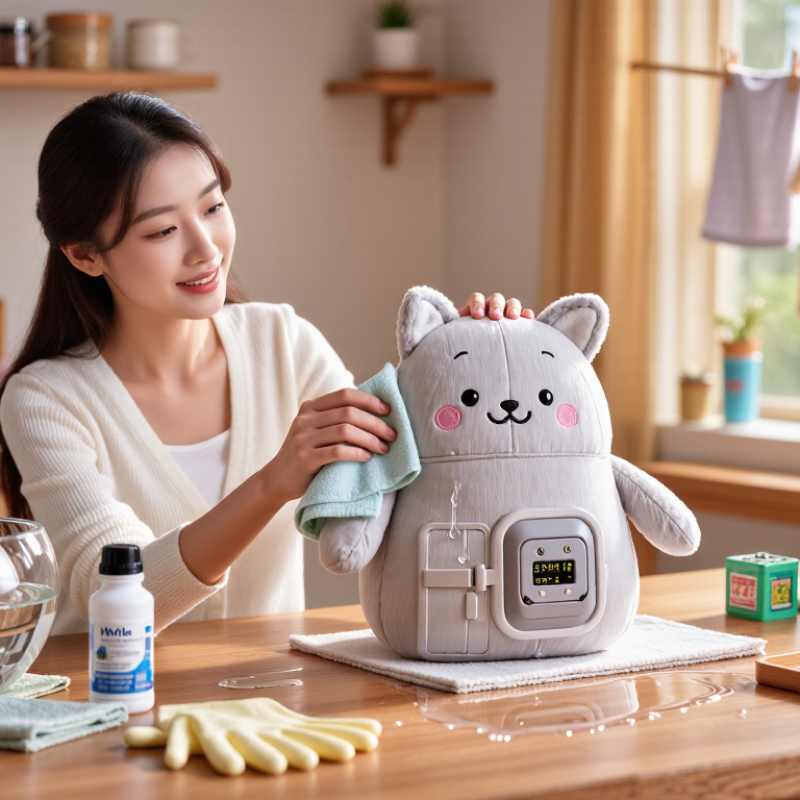
Check the cleaning label before touching the plushie. It tells you whether the toy is surface-clean only or fully washable. Remove the batteries first, even when the toy seems quiet. A small label may hide inside a seam or near the battery compartment. Read it carefully. Do not guess.
Tip: Open the battery compartment with dry hands. Take out every battery and check for leakage, rust, or loose contacts. Wipe dust away with a dry cotton swab. For light grime, use a barely damp cloth, then dry the area immediately. Never pour water into the compartment. If the cover feels stuck, do not force it. I once rushed this step and loosened a tiny screw. That mistake made cleaning harder.
Tip: Clean the plush according to its label. Use a soft cloth and mild soapy water for surface-clean toys. Keep moisture away from the speaker, switches, and seams. If the label permits washing, remove the sound module first. Let every part dry completely before reinstalling batteries. Waiting feels excessive, but hidden moisture can damage the electronics. Check the compartment again before closing it. Batteries should sit firmly, with their positive and negative ends facing the marked directions. If corrosion or leaking remains, stop using the toy and seek qualified repair advice.
7 Tips: How to Clean Battery-Operated Talking Plushies?
Remove the batteries before touching the talking mechanism. This prevents accidental sounds, short circuits, and corrosion during cleaning. The U.S. Consumer Product Safety Commission reported about 2,800 annual emergency visits linked to button-battery ingestion. Keep loose batteries away from children and pets. Check the battery compartment first. Photograph the wiring before opening anything. Remove the battery cover gently. If the electronic module is removable, detach it completely. Never wash the module under running water.
Use a soft brush to lift dust from seams and speaker openings. Spot-clean the fabric with a slightly damp cloth and mild soap. Avoid soaking the plush. Moisture can travel through stitching and remain near the circuit board. I once wiped a toy too heavily and found dampness inside the next day. That mistake changed my routine. Blot, do not scrub. Clean the speaker grille with a dry cotton swab. Inspect for rust, swollen batteries, loose wires, or a sharp battery edge. Replace damaged parts through qualified repair support.
Let the plush air-dry fully for at least 24 hours. Keep it open and away from direct heat. Do not reinstall batteries early. The IEC 60086-4 standard emphasizes safe handling of lithium coin cells, including protection from short circuits. Insert fresh batteries only after the fabric and compartment feel completely dry. Test one function at a time. If sounds become weak, stop testing. The cleaning may need a second attempt. Safety checks are not glamorous, but they prevent avoidable damage.
| No. | Cleaning Tip | Recommended Action | Materials | Typical Time | Important Precaution |
|---|---|---|---|---|---|
| 1 | Remove the batteries first | Turn off the plushie, open the battery compartment, and remove every battery before cleaning around the talking mechanism. | Dry hands and a suitable screwdriver, if needed | 2–5 minutes | Never clean a battery-operated toy while batteries are installed. Keep batteries away from children and moisture. |
| 2 | Check the care label | Read the sewn-in care instructions and identify whether the outer fabric or cover is removable. | Care label and user instructions | 1–3 minutes | The care label takes priority. Some plushies are spot-clean only because the electronic unit cannot be removed. |
| 3 | Remove loose dirt | Gently shake, brush, or vacuum the surface using low suction to remove dust, crumbs, and loose hair. | Soft brush or vacuum with a fabric attachment | 3–5 minutes | Avoid pressing hard on the speaker, sound button, seams, or battery compartment. |
| 4 | Spot-clean the fabric | Dab stains with a cloth lightly dampened with lukewarm water and a small amount of mild detergent. | White cloth, lukewarm water, mild detergent | 5–10 minutes | Do not soak the plushie or allow liquid to enter the speaker, seams, buttons, or electronic housing. |
| 5 | Clean a removable cover carefully | If the cover is designed to be removed, wash it only according to its care label, preferably by gentle hand washing. | Basin, lukewarm water, mild detergent | 10–15 minutes | Remove the electronic module completely before washing. Do not machine-wash a cover unless the care label permits it. |
| 6 | Rinse and air-dry fully | Blot away excess moisture with a towel, reshape the plushie, and let it dry naturally in a well-ventilated area. | Clean towel and drying rack | 24–48 hours | Do not reinstall batteries or the talking module until all fabric, seams, and the compartment are completely dry. |
| 7 | Inspect and test before use | Check for dampness, loose seams, battery leakage, corrosion, or damage. Insert fresh batteries only after inspection and test the sound function. | Dry cloth and replacement batteries when needed | 3–5 minutes | Do not use batteries that are swollen, leaking, or corroded. Follow the compartment’s polarity markings. |
Spot-clean surface dirt with a mild soap solution. Remove the batteries first, if the design allows it. Mix a few drops of mild, fragrance-free soap with lukewarm water. Dip a soft cloth into the mixture, then wring it until barely damp. Gently dab muddy paws, food marks, and dusty seams. Do not pour water onto the plush. Moisture can reach the speaker, wiring, or battery compartment.
The U.S. Centers for Disease Control and Prevention reports that proper cleaning and hand hygiene can reduce diarrheal illness by 23–40%.
A clean surface still needs careful handling.
Test the solution on a hidden patch before treating the visible stain. Watch for color transfer or fabric fuzzing. Use a second cloth with clean water to remove soap residue. Then press the area with a dry towel and air-dry the toy away from heaters and direct sunlight. Keep the sound button and openings dry.
Small details matter.
My own weak point is rushing the drying step, especially around thick stuffing. That can leave a cool, damp center for hours.
A 2023 consumer cleaning survey from the American Cleaning Institute found that many households view routine cleaning as important for health, but plush toys are often overlooked.
Inspect the toy after drying. If the voice sounds muffled, stop using it until the interior is completely dry.
7 Tips How to Clean Battery Operated Talking Plushies?
Talking plushies need gentle cleaning because their sound units dislike moisture. Remove the batteries before touching the toy. This prevents accidental activation and reduces electrical risk. Check the care label and inspect the battery compartment. Look for rust, dampness, or sticky residue. Do not immerse the plush in water. Even a short soak can trap moisture around wires and speakers.
Use a soft cloth that is barely damp, not wet. A mild soap solution can remove marks from the outer fabric. Test it on a hidden area first. Wipe around the electronic compartment carefully. Keep water away from buttons, seams, and speaker openings. For small stains, use a cotton swab with very little moisture. Never pour cleaner directly onto the plush. That mistake is easy to make. I have found that a dry cloth often works better than expected.
Let the toy air-dry completely before replacing the batteries. Place it in a warm, ventilated room, away from direct sunlight. Avoid hairdryers, radiators, and heated cabinets. Strong heat may damage fabric, glue, or internal components. Wait at least 24 hours if the filling feels cool or damp. Press the plush gently and check for hidden moisture. Store it in a dry area, not inside a sealed plastic bag. If the sound becomes weak or unusual, stop using the toy and inspect it professionally.
Protect the electronic parts from water and moisture.
The chart shows the recommended moisture exposure for each cleaning step. A score of 0 means the electronic part must remain completely dry, while a score of 1 means only a lightly damp cloth is appropriate for the washable fabric surface. Remove the batteries before cleaning, keep water away from the speaker, switch, and battery compartment, and allow the plushie to dry fully before use.
Cleaning a battery-operated talking plushie requires patience, especially around its sound module. Remove the batteries before touching water. Check the care label and locate the battery compartment. Wipe the fabric with a slightly damp cloth and mild soap. Do not soak the toy. Test the cleaner on a hidden seam first. A small stain may need gentle rubbing, not force.
Drying is the safety-critical stage. Press the plushie between clean towels to remove moisture. Do not twist it. Leave it open in a warm, ventilated room for at least 24 hours. Keep it away from radiators, hair dryers, and direct sunlight, which can damage fabric and wiring. Check deep seams and the compartment edge carefully. If it still feels cool or damp, wait longer. I once rushed this step, and the toy sounded weak afterward.
Before reassembly, inspect the battery contacts, wires, stitching, and closure. They should be clean, dry, and firmly attached. Insert fresh batteries with the correct polarity. Close the compartment securely, but do not overtighten screws. Place the plushie on a dry table and test one function at a time. Listen for clear speech and normal volume. Stop immediately if you notice heat, a strange smell, crackling, or intermittent sounds. Remove the batteries and seek qualified repair advice. Safety matters more than restoring the toy quickly.
Read the care label and locate the battery compartment. Do not guess. A small label may hide inside a seam.
Yes. Remove every battery before touching water, fabric, or the sound mechanism. Keep loose batteries away from children and pets.
Use dry hands and a dry cotton swab for dust. Never pour water inside. Check for rust, leakage, or loose contacts.
Use a soft cloth with mild soapy water. Test it on a hidden seam first. Blot gently instead of scrubbing hard.
Only if the label permits washing. Remove the sound module first. Never wash the module under running water.
Keep moisture away from speakers, switches, seams, and circuit parts. Use a dry cotton swab around the speaker grille. It is easy to over-wet the fabric.
Leave it open in a warm, ventilated room for at least 24 hours. Avoid radiators, hair dryers, and direct sunlight. If it feels cool or damp, wait longer.
Inspect the wires, contacts, stitching, and closure before inserting fresh batteries. Check polarity carefully. Test one function at a time. Stop if you notice heat, strange smells, crackling, or weak sounds.
Learning how to clean battery operated talking plushies starts with checking the care label and locating the battery compartment. Before touching the fabric or talking mechanism, remove all batteries to prevent accidental activation and reduce the risk of electrical damage. Examine the toy for removable parts, seams, or areas that require special care. For ordinary surface dirt, use a soft cloth or sponge lightly dampened with mild soap solution. Gently spot-clean the plush fabric instead of soaking it, and avoid harsh cleaners that may damage the material or colors.
Keep water and moisture away from speakers, wiring, buttons, and other electronic components. After cleaning, blot away excess dampness with a dry towel and allow the plushie to air-dry completely in a well-ventilated place. Do not reinstall the batteries while any part remains damp. Once fully dry, replace the batteries, secure the compartment, and test the talking function carefully to ensure the plushie works safely.

Ottoman Toys